
Expired Building Plans: The 12-Month Municipal Law that catches Western Cape Property Buyers, Investors and Real Estate Practitioners
The Hidden Risk in Western Cape Real Estate Transactions
Imagine this scenario: You have spent months scanning property portals looking for the perfect home in Somerset West, Stellenbosch, or the Southern Suburbs. You finally find a beautiful property, and it comes with a big bonus, it has a set of approved municipal plans for a 60m2 modern master bedroom extension and a covered entertainment deck.
You pay the full asking price, happy that you won't have to endure the typical municipal design submission delays. The transfer goes through smoothly, the keys are in your hand, and the property is officially yours.
You spend some time gathering construction quotes, selecting a local contractor, and setting up the site. The trenches are dug, the building material arrives on the driveway, and work officially begins.
Then, a municipal building inspector pulls up to your new property. He requests to see the approved building plans, takes a look at the approval date, and issues an immediate, Stop-Work Order.
To your absolute shock, you are informed that your approved plans have legally expired.
How is this possible? Surely, municipal approval means you have a permanent right to build? The real estate agent’s brochure proudly advertised the property "with approved plans." You feel immediate frustration, wondering if you have been intentionally misled by the seller or fooled by a property practitioner looking to secure a commission.
The Statutory Reality:
Section 7(4) of the National Building Regulations
This costly scenario unfolds across the Cape Peninsula and Winelands because a vast majority of homeowners, buyers, and property practitioners are unaware of the strict statutory timelines attached to local government when it comes to building plan approvals.
In South Africa, municipal building plan approval is not a permanent right. The timeline is governed by Section 7(4) of the National Building Regulations and Building Standards Act 103 of 1977. The statute states in summary:
If the architectural erection of an approved building or structure has not officially commenced within a continuous period of 12 months from the exact date on which the local authority granted its stamp of approval, that approval lapses automatically by operation of law.
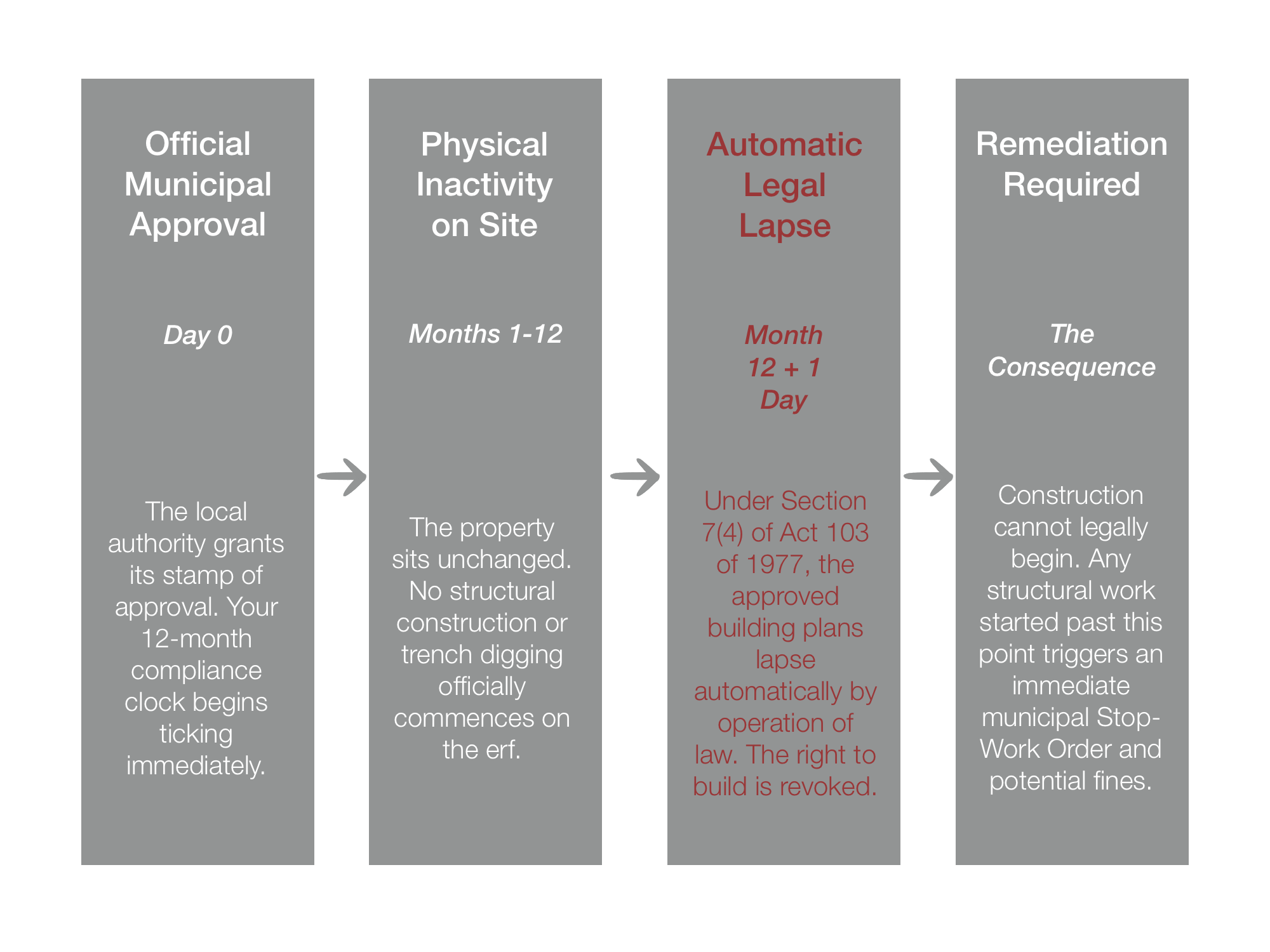
Figure 1: The statutory 12-month expiration timeline under Section 7(4) of the National Building Regulations (Act 103 of 1977).
Why Do Local Councils Enforce a 12-Month Expiration Clock?
Municipalities like the City of Cape Town and Stellenbosch Municipality are not static and operate within fluid, shifting urban frameworks. Over a 12-month window, local authorities regularly update their underlying Development Management Schemes (DMS), update local spatial development frameworks (SDFs), alter environmental conservation overlays in heritage zones like Paarl and Franschhoek, or tighten structural safety mandates under SANS 10400 national guidelines.
A design that conformed flawlessly to local building lines, height restrictions, or floor factor limitations two years ago may violate newly updated zoning laws today. The 12-month expiration clause helps align new builds with current town planning objectives and restrictions.
The Legal Impasse: Property Practitioners and the Voetstoots Clause
When a property is sold with outdated or unapproved municipal plans, it is rarely a case of intentional real estate fraud. Under the Property Practitioners Act (PPA), a Real Estate Practitioner’s primary compliance duty is simply to ensure the seller completes a mandatory Property Condition Disclosure Form. If a homeowner presents municipal plans stamped three years ago, genuinely believing they are valid, the agent will pass them to the buyer in good faith. Property practitioners are neither legally qualified nor insured to audit architectural drawings.
In South African property law, missing or unapproved building plans are classified as a latent defect which is a hidden issue that cannot be identified during a standard visual inspection.
However, signing an Offer to Purchase (OTP) with a standard voetstoots (as-is) clause without verifying these drawings carries risk. While a voetstoots clause protects an honest seller who genuinely didn't know about the issue, it places burden on the buyer to ensure existing and future structures are legal. The only way a buyer can hold a previous owner liable for these costs post-sale is if they can prove the seller knew the plans were invalid and intentionally hid the truth.
The Action Plan: What To Do If Your Plans Have Lapsed
If you discover your newly acquired property drawings have slipped past their 12-month validity window, you have three clear regulatory pathways to resolve the non-compliance.
1. The Tactical Postponement
If your capital is temporarily exhausted by Western Cape transfer duties, conveyancing attorney fees, and bond registration costs, you can legally choose to pause the additions. An expired plan does not make the existing, historically approved house illegal. It simply revokes your right to build the new, unbuilt extensions. You can leave the property layout exactly as it is until your development capital recovers.
2. The 50% Plan Fee Tariff Window (City of Cape Town Only)
If you catch the expiration early, the City of Cape Town’s Building Development Management department offers a highly practical administrative concession. If you resubmit an identical set of architectural plans within 6 months of the original lapse date, the municipality will discount your plan submission tariff by 50%, provided that all original internal department clearances (such as environmental impact assessments or localized zoning departures) remain legally valid. This will give you another 12 months.
3. Full Retrospective Resubmission & SANS 10400 Circulation
If the approval lapsed more than 6 months ago, the city treats your project as a completely brand-new development application. You must appoint a registered Architectural Professional to digitize the physical layouts and manage a fresh application.
The Architectural Professional must compile and sign the mandatory SANS 10400 Forms, taking full indemnity for the architectural design. Once submitted to the local authority, the plans are circulated to the zoning, fire safety, environmental health, and engineering departments. In the Cape Town metro and Stellenbosch areas, you must budget for a realistic timeline of at least 3 months minimum for council circulation before a new, approval stamp is legally issued.
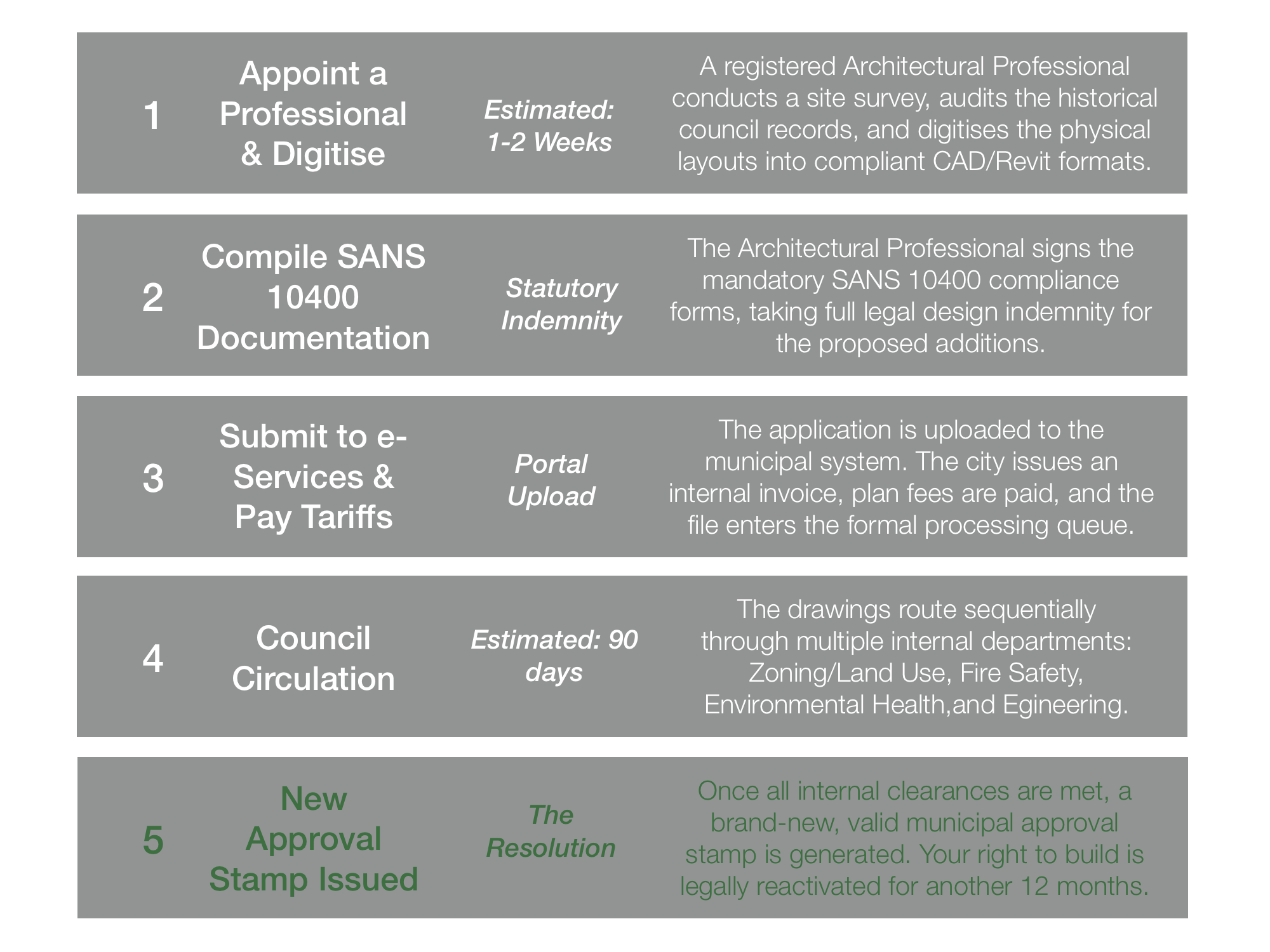
Figure 2: The standard administrative circulation and regularization framework for retrospective municipal plan resubmissions in the Western Cape.
Due Diligence: Protecting Your Investment Before Signing an OTP
The most effective way to manage an expired building plan is to intercept it before it becomes your legal liability. If you are currently negotiating to purchase a home in Somerset West, Stellenbosch, or the wider Western Cape that features "approved drawings" for future renovations, you must consider when the approval of those plans will lapse. Factor in the delay and extra cost associated with getting alteration or addition plans re-approved, if this proves necessary.
Some Architectural Professionals offer due diligence audits. A professional audit flags issues related to zoning and plan approval including expiring timelines, boundary line encroachments, and discrepancies between plans and what has been built.
A 12-month expiration clock can turn your property investment into an expensive municipal waiting game, so be informed before you sign away your legal leverage.
Professional Liability Disclaimer: This article provides a general overview of Section 7(4) of the National Building Regulations and municipal protocols within the Western Cape. Because local development management schemes, sub-council delegations, and zoning frameworks vary significantly between individual properties and local authorities (including the City of Cape Town and Stellenbosch Municipality), this text should not be used as a definitive legal or architectural guide for personal construction projects. Always engage a registered Architectural Professional to conduct a dedicated, site-specific zoning and plan audit before entering into an unconditional property transaction or commencing structural alterations.
